Last Updated: October 28, 2026
Quick Summary
Evidence of ancient anomalies in history is any object, structure, or text that does not fit the accepted timeline, capability, or context of the civilization that produced it. Investigate ancient anomalies by checking provenance first, then independent dating, then interpretation, since the physical object is usually genuine and the interpretation is where the anomaly lives.
- An archaeological anomaly conflicts with the expected pattern for its period, location, or culture.
- The Antikythera Mechanism's gear complexity has no known predecessor in the surviving record.
- The Baghdad Battery's electrical explanation is a hypothesis, not a finding.
- The Dropa Stones have no documented find spot and no independent laboratory dating.
- Start with primary descriptions and excavation reports before any interpretation.
Table of Contents
- What Counts as Evidence of Ancient Anomalies in History
- Out-of-Place Artifacts That Still Resist Easy Answers
- Unsolved Ancient Mysteries: The Nazca Lines and the Voynich Manuscript
- How Researchers Evaluate Archaeological Anomalies
- Ancient Artifacts That Challenge History: What Remains Genuinely Unresolved
- Reading the Evidence Yourself: Where to Start With Robert H Fox
- Frequently Asked Questions
What Counts as Evidence of Ancient Anomalies in History
Evidence of ancient anomalies in history is any object, structure, or text that does not fit the accepted timeline, capability, or context of the civilization that produced it.
An archaeological anomaly is a discovery that conflicts with the expected pattern for its period, location, or culture, technologically, chronologically, or contextually.
Most anomalies dissolve under scrutiny. The few that survive are worth your attention.
The Difference Between an Anomaly and a Mistake
An anomaly is a genuine puzzle; a mistake is a misreading, forgery, misdated layer, or an artifact that lost its context before reaching a museum. Telling them apart is the whole job.
Three questions separate the two:
- Was it found in a sealed, documented context? If the object came from a controlled excavation with recorded stratigraphy, it carries weight. If it surfaced in an antique shop, it carries almost none.
- Has independent material analysis confirmed it? Metallurgy, radiocarbon dating, and residue testing can rule out modern manufacture.
- Does a mundane explanation fit the evidence? Trade routes, reuse, later intrusion, and simple misidentification explain far more than most people expect.
A common mistake is treating a single odd object as proof of a lost civilization. One artifact is a data point; a pattern from secure contexts is evidence.
Out-of-Place Artifacts That Still Resist Easy Answers
Out-of-place artifacts are objects found where, or when, they should not be. The category attracts wild claims, but a handful have survived serious scrutiny without a clean resolution.
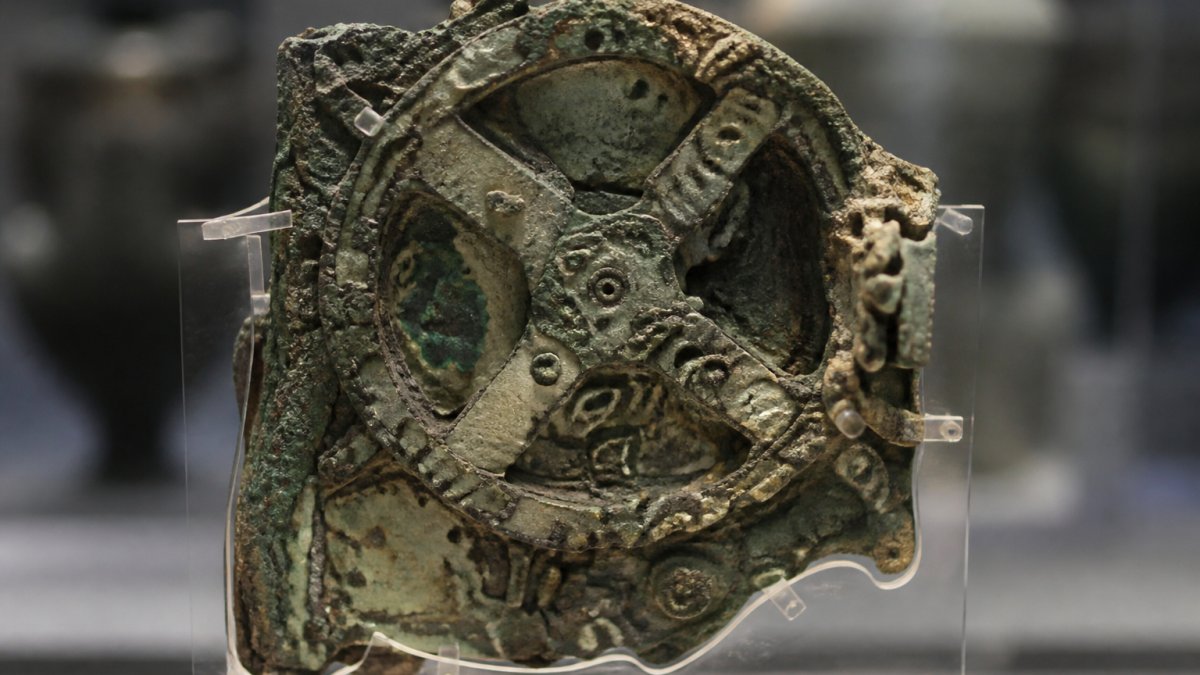
The Antikythera Mechanism and the Limits of Ancient Engineering
The Antikythera Mechanism is a geared bronze device recovered from a shipwreck off the Greek island of Antikythera in the early twentieth century.
Scholars have reconstructed its function but not its lineage: where the design tradition came from, and why it vanishes from the record, remain open questions.
Evidence quality: High. The object came from a documented shipwreck, its date is supported by multiple lines of analysis, and its function has been reconstructed from the physical gears.
The Baghdad Battery and the Problem of Misread Function
The popular claim is that these jars generated electricity, possibly for electroplating.
The jars' purpose is unknown, and the electrical explanation is a hypothesis, not a finding. The anomaly is real; the famous explanation is probably wrong.
Evidence quality: Mixed. The objects are genuine and dated, but the electrical interpretation is speculative and lacks supporting context.
The Saqqara Bird and the Limits of Interpretation
The Saqqara Bird is a small wooden object, roughly 14 centimetres long, recovered from an Egyptian tomb and dated to around 200 BCE.
Popular claims describe it as a model of a glider or aircraft, but the evidence does not support that.
Evidence quality: Low for the aircraft hypothesis. The object is genuine; the interpretation is not supported by aerodynamics or archaeological context.
The Piri Reis Map and the Problem of Source Material
The Piri Reis Map is a world map drawn on gazelle skin in 1513 by the Ottoman admiral Piri Reis.
The popular claim is that the map shows the Antarctic coast without ice, implying an ancient source. The evidence is weaker: the southern landmass is not clearly Antarctica, the coastline is not a precise match, and the map's own annotations describe its sources as contemporary.
Evidence quality: High for the map's date and provenance; low for the ancient-source hypothesis.
The Dropa Stones and the Problem of Provenance
The Dropa Stones are a set of stone discs, said to be about 12,000 years old, bearing spiral grooves that some claim contain an unknown script.
The problem is provenance. The discs surfaced through private channels, not a controlled excavation.
Evidence quality: Very low. Without a documented find spot and independent dating, the discs cannot be treated as evidence of anything beyond the story itself.
What the Pattern Shows
The pattern is consistent: the physical object is usually genuine, the date is often established, and the interpretation is where the anomaly lives.
The practical lesson: check provenance first, then dating, then interpretation. A spectacular claim built on an unprovenanced object is not evidence of an ancient anomaly, it is evidence of a story.
Unsolved Ancient Mysteries: The Nazca Lines and the Voynich Manuscript
Two of the most durable unsolved ancient mysteries sit at opposite ends of the evidence spectrum: one enormous and visible from the air, the other small, portable, and unreadable.
The Nazca Lines are geoglyphs etched into the desert floor of southern Peru, some stretching hundreds of metres.
The Voynich Manuscript is a bound volume carbon-dated to the early fifteenth century, written in an undeciphered script and illustrated with plants that match no known species.
How Researchers Evaluate Archaeological Anomalies
Researchers evaluate archaeological anomalies through context, material analysis, and replication, the only thing that separates a real puzzle from a story.
The workflow looks like this:
- Establish provenance. Where was the object found, by whom, and under what conditions? Documented excavation is the gold standard.
- Date the material independently. Radiocarbon, thermoluminescence, and metallurgical analysis cross-check each other.
- Test for authenticity. Microscopy and residue analysis catch modern tool marks and forgeries.
- Attempt replication. If the object could have been made with the technology of its era, the anomaly weakens.
- Publish and invite challenge. Claims that survive peer scrutiny are the ones worth keeping.
Dating, Provenance, and Excavation Context
Dating and provenance decide most cases before interpretation begins. An object with a clean excavation record and a consistent radiocarbon date is a legitimate candidate for study; one with no recorded find spot is a rumour with a photograph attached.
The most common failure is accepting an artifact's age from its appearance rather than material testing. A convincing patina can be manufactured in a workshop; only laboratory analysis settles it.
Ancient Artifacts That Challenge History: What Remains Genuinely Unresolved
A short list of ancient artifacts that challenge history, honestly assessed, is shorter than most people expect, a map of where the real work remains.
The table below separates what is established from what is genuinely unresolved, and from what is often claimed but not supported.
| Artifact or Site | What Is Established | What Remains Unresolved | What Is Often Claimed but Not Supported |
|---|---|---|---|
| Antikythera Mechanism | Date, function, gear complexity | Origin of its design tradition | That it proves a lost advanced civilization |
| Baghdad Battery | Date, materials, construction | Original purpose | That it was used for electroplating |
| Nazca Lines | Construction method, date range | Purpose and use | That they were landing strips for aircraft |
| Voynich Manuscript | Age, material authenticity | Script, language, content | That it is a modern hoax |
| Piri Reis Map | Date, authorship, source notes | Accuracy of its southern coastline | That it depicts ice-free Antarctica |
| Dropa Stones | Existence of the discs | Age, script, find spot | That they contain an extraterrestrial message |
The pattern is consistent: the physical facts are usually settled, and the interpretation is not.
How to Tell an Unresolved Question from an Impossible Claim
The most useful skill is telling the two apart. An unresolved question is narrow and specific: what was the Baghdad jar for? Who taught the Antikythera mechanism's maker?
The first can be investigated with evidence; the second cannot, because it is framed so no evidence could settle it. When you read about an ancient anomaly, ask which kind of question the author is asking.
The Dating and Provenance Test
Before any artifact can be called unresolved, it has to pass two tests. First, dating: has independent material analysis established its age, or is the age assumed from appearance or the object's own claims? Second, provenance: was it found in a documented excavation, or did it surface through private channels?
An artifact that fails either test is not unresolved. It is unverified. The difference matters, because unverified objects are where most sensational claims originate. A documented excavation with recorded stratigraphy is the gold standard; an object with no find spot is a story with a photograph attached.
What Genuinely Remains Open
What remains genuinely unresolved is not "did an advanced civilization exist" but something narrower and more interesting: why did certain capabilities appear, disappear, and reappear in the record without a clear line between them?
That is the difference between an anomaly worth studying and a claim worth dismissing. The first invites investigation. The second invites belief. This article is interested in the first.
Reading the Evidence Yourself: Where to Start With Robert H Fox
If you want to investigate evidence of ancient anomalies in history for yourself, start with primary descriptions and excavation reports before any interpretation.
This Ain't Eden is a 144-page first edition that offers an interpretive journey into human origins and the mysteries beyond conventional knowledge. Robert H Fox also writes fiction, including From Shadows To Light: The Memoirs of Damon Blackwood, available in paperback and Kindle editions.
The questions are more interesting than the answers, and they are yours to pursue.
The hardest part of this subject is not finding strange objects. It is finding a source that shows its work. This Ain't Eden offers an interpretive journey into human origins and mysteries beyond conventional knowledge.
Frequently Asked Questions
What are some examples of ancient anomalies in history?
The most cited examples include the Antikythera Mechanism, a geared bronze device recovered from a Greek shipwreck that modelled celestial movements; the Baghdad Battery, a clay jar with a copper cylinder that some interpret as an early electrochemical cell; the Nazca Lines, large-scale geoglyphs in Peru visible mainly from the air; and the Voynich Manuscript, an undeciphered illustrated codex. Each is genuinely unusual, but the interpretations vary widely. Researchers treat them as open questions rather than proof of lost advanced civilizations, and the evidence quality differs sharply from one case to the next.
How do archaeologists determine whether an artifact is genuinely anomalous?
They start with context. An object's excavation layer, associated finds, and recorded provenance tell you far more than its appearance. Material analysis can confirm what an object is made of and how it was worked. Dating methods such as radiocarbon or thermoluminescence place it in time. Only after those steps do researchers ask whether the object fits known technology for its era. Many apparent anomalies dissolve at this stage, explained by misidentification, later intrusion into an older site, or a function the original excavators never considered.
Are there artifacts that challenge the accepted timeline of history?
Several objects raise questions without overturning the timeline. The Antikythera Mechanism shows gear technology centuries earlier than most surviving examples, which challenges assumptions about what was possible rather than when humans appeared. Out-of-place artifacts found in unusual locations, such as objects recovered from shipwreck cargo or deep underground deposits, sometimes complicate the record of trade and settlement. The honest position is that these cases narrow the gap between what we assume and what we can prove, but none has displaced the broader chronological framework supported by excavation and dating evidence.
What is the difference between an unexplained artifact and evidence of an advanced ancient civilization?
An unexplained artifact is a single object or site whose purpose, date, or manufacture is not yet settled. Evidence of an advanced civilization would require a pattern: infrastructure, workshops, waste from production, and a settlement context that shows sustained capability. One puzzling mechanism found in a shipwreck is a genuine anomaly. It is not, on its own, proof of a lost technological society. Researchers look for repetition and context before drawing that conclusion, and so far the anomalous finds remain isolated rather than systemic.